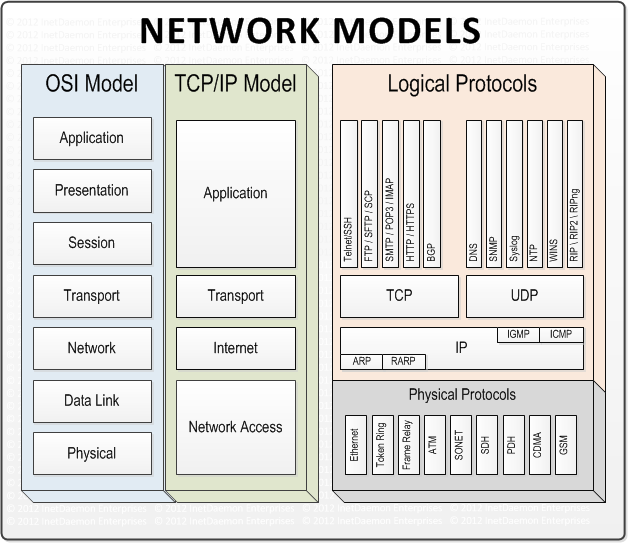
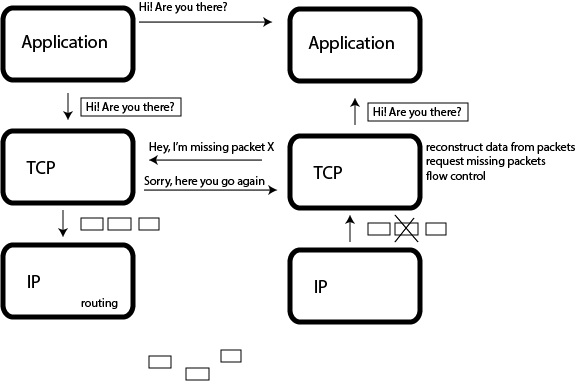
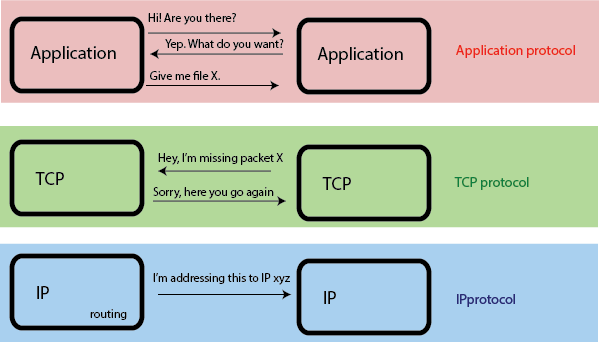
Watch what "protocol" means in practice. Application, TCP, and IP each carry on their own private conversation with the matching layer on the other machine. Data only physically moves down one stack, across the wire, and up the other, but logically, each layer believes it is talking straight across to its peer.
What "protocol" means technically
- An agreed set of rules that lets two peers exchange messages: the
format of a message (syntax), the vocabulary of legal messages,
the order they are allowed to occur in (the state machine), and the
meaning of each one, including what to do on error or timeout.
- The rules are written down in public (RFCs) so anyone can implement them.
That is why any browser can talk to any web server, with no prior arrangement
between the two vendors.
- A protocol is defined only between peers on the same layer. HTTP says
nothing about Wi-Fi. IP says nothing about your browser. Each layer's rules
are independent of the layers above and below it.
- Result: interoperability without a central authority. What holds the network
together is agreement on the rules, not ownership of the wires.
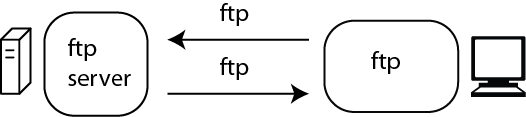
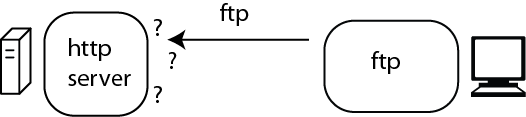
Application does not have to worry about TCP or IP, it only speaks its own protocol (HTTP, FTP...) to the Application on the other end.
TCP does not have to worry about Application or IP, it only speaks TCP to the TCP on the other end.
IP does not have to worry about Application or TCP, it only speaks IP to the IP on the other end.
That per layer, peer to peer conversation, independent of the layers above and below, is what "protocol" means here.
Use the interactive demo to step through a request going down Host A's stack, across the physical network, and back up Host B's stack.
Technical definition to say out loud: format, vocabulary, legal order, meaning. Written in public so strangers can interoperate.
Galloway's move: same definition, then widen it to "correct or proper behavior within a system of conventions", so protocol becomes a management system.
The stop sign example works well here. No one stops you, but you cannot drive if you ignore it.
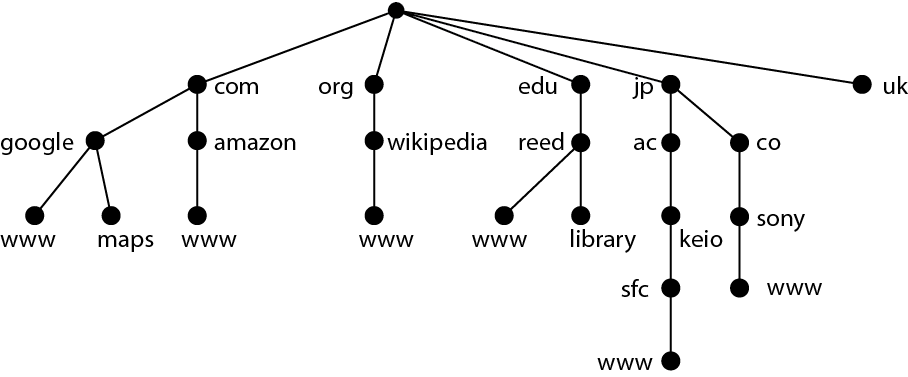
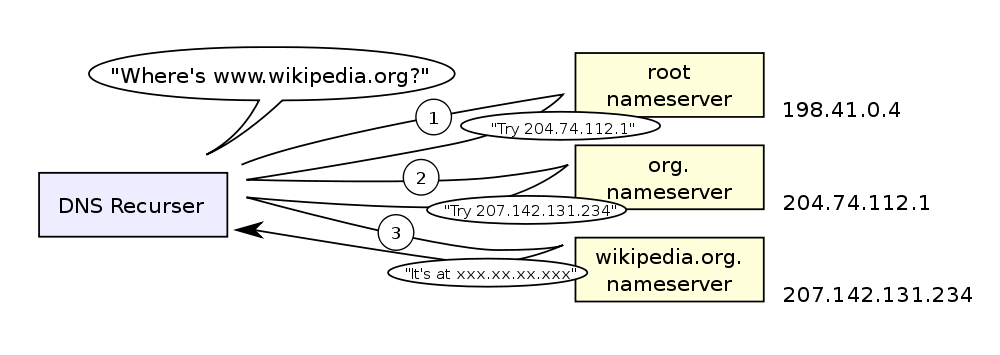
TCP/IP horizontal vs DNS hierarchical is the pair to plant now, since DNS was covered earlier in this deck.

.jpeg)


.jpg)