|
My work investigates the approaches in image making made possible through the reliance on digital technology. They center on algorithmic computations executed over the images recorded through the lens. For all images, source materials were scanned from negative film. After adjusting contrast and color on Photoshop, the images were transformed by another computer program I wrote, into grids. The computer program implements the algorithms that decides how to transform the original photographic image into grids. The representation provided by the photographs are questioned, and is reduced to its essentials, thereby revealing the underlying structure of its two elements: form and color. Each image, whether it is from an urban scene or a natural terrain, is divided into grids, of equal size. Form is extracted through a recursive subdividing process of the grids based on complexity. Color and its sensory qualities are heightened through selection and reduction. The colors rendered in each grid are averaged and reduced into a monochrome. Alleviated of their descriptive role within representational view, the elemental properties of form and color are distilled into a new landscape that can be seen as residing unrevealed in the original photograph. The effect is a liberation of form and color from narrative, without eliminating, in total, its primary relationship to photographic representations of the external world. |
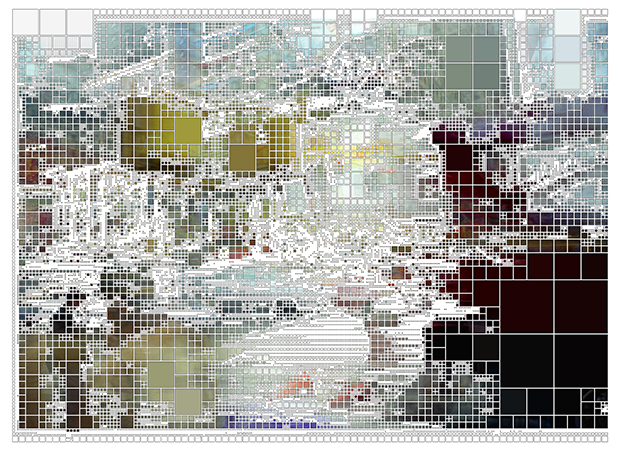 "The Way it is", Inkjet, 24x33 in, 2003
|
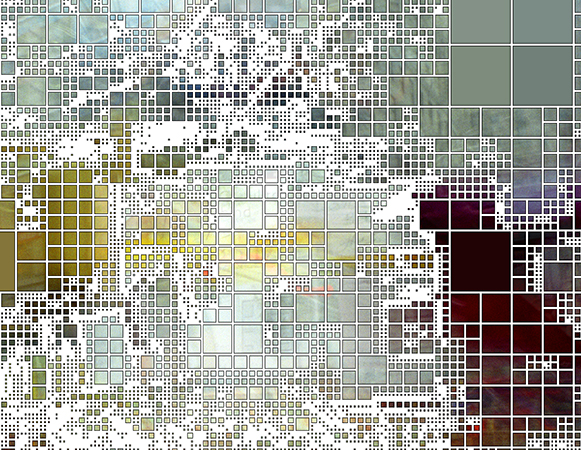
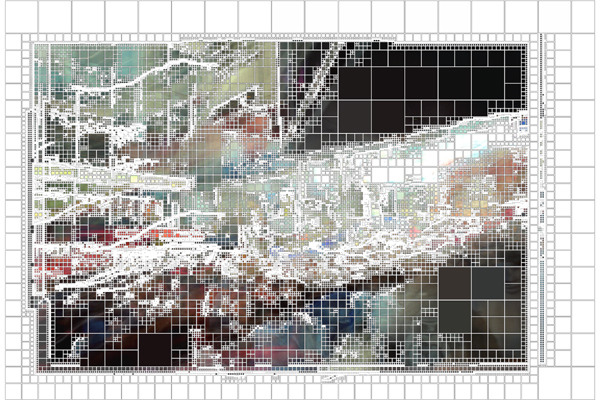
"How We See Things", Inkjet, 34x47 in, 2003 |
home
Copyright 2004, Akihiko Miyoshi
Last modified: Sun Nov 14 04:15:16 EST 2004