|
The Rhodes and |
Caitlin B. |
|
Caitlin: “If you're unsure, apply -- it's fun.”
As a student twice nominated and twice interviewed for the Rhodes, I suppose I have a unique view of the process. My experiences in 1998 and 2000 were remarkable both in their differences and their similarities, so I'll structure this note along those lines.
First: Differences.
In 2000, the pool of prospective Rhodes scholars struck me as distinctly intelligent, sweet, funny, visionary, and wholesome. In short, I felt deeply in awe of each of them and would have been happy to see almost anyone in the group win the award. I note this as a difference because I did not feel that way about the applicants two years earlier. Each year rounds up a different crew of eager, ambitious, smart kids with big dreams. I'll list a few of the attributes that I thought distinguished this group and forced the panel of interviewers to debate over us for nearly seven hours.
Prepared for interviews. Each person had his or her own strategy, and no one lacked a strategy. Some great ideas: make a list of the topics you want to talk about the most and try to steer the interview in those directions; make a list of the three Rhodes Interview "moments" and be sure you have a good response the each (something about which you know NOTHING, something about which you are deeply impassioned, something you have failed at and from which you learned a great deal); make a list of the moments/ questions you most dread and be prepared to tackle them like Jacob pinning his most fierce opponent; . . . you get the drift of this.
Genuine. The kids who impressed me in 2000 were really genuine, nice, funny, and hugely intelligent. Where do these people come from? Perhaps there's hope for our nation after GWB after all.
Experienced. None of these applicants had been lost in the stacks for four years. These were stunning social and political movers and shakers.
Second: Similarities.
Interviewers. You'd better believe that returning the same imposing panel of interviewers after two years was a little cowing for me. At any rate, I can't say whether or not the panel is supposed to change in coming years or not, but I can say this: these are really nice, intelligent, (generally) politically liberal and academically conservative professionals and scholars who are not here to be themselves. They know what the Rhodes trust seeks, and (regardless of their private views of the world) do a fine job choosing candidates who fit the bill. After reading so much of their scholarship, this can be a disappointing reality. I recommend reading some of their stuff (it's easy to find on the web and get through Orbis), but don't knock yourself out. It's far more pressing that you have a clear, down-to-earth, earnest, and ambitious sense of what YOU are doing and want to do in the future. And if you don't know the answers to these questions, read the final section in here about illustrious me.
The questions. Strangely, I remember the questions from 1998 better than the ones from this winter. I think I felt more terrified two years ago and have each moment captured in chiaroscuro at the back of my brain. All the same, expect a lot of questions about current events (DO READ THE NYT, ECONOMIST, FOREIGN AFFAIRS, AND ANY OTHER REGULAR JOURNAL DAILY! AND KEEP A DIARY, SO YOU CAN LOOK OVER IT ALL DURING THE DAYS BEFORE THE INTERVIEW (I, for one, can't think unless I'm writing). Also, prepare yourself to be funny and humble when they ask about things you haven't ever considered. Most importantly, know your topic, and answer briefly so they can ask lots of different questions. My personal bias on this is that it's a lot easier to interview as a science person than a humanities person. While the interviewers won't want you to defend in great technical detail what it is you do in the lab, they will demand that you defend each and every detail of your political, historical, or social outlook and if you claim to be a student of any of these fields, you must contend with the fact that every educated person knows a little bit about the special thing you (hopefully) know a lot about.
Myself. I, of course, was the same earnest, smart, and quirky gal both times around. I don't have any regrets about applying. Here's my rejoinder to my earlier note about not knowing what you want to do. Applying for the Rhodes (unlike some of the other fellowships for which I have applied) forced me to consider in ways I never had before my own future, ambitions, and dreams. Both times, I decided to apply on a bit of a whim (sorry Ken, it's true!) and then sunk myself into the process heart and soul for a few hours each day. I think it's ok to do this (as I said, I learned a lot and have no regrets) but don't expect to get the award if this is your approach. Unlike me, a lot of the people interviewing for the Rhodes have known that this was their goal for years, and had very good reasons to pursue their research at Oxford. For me, the process of applying was great -- and actually getting the chance to research at Oxford seemed a fabulous and unlikey possibility.
Some final recommendations
If you're young, wait to apply until after graduating. Give yourself time to get some life experience under your belt, and don't screw up your thesis by exerting so muh energy on applications in the fall. If you're unsure, apply -- it's fun. But let the people who are helping you know that you have uncertainties. They can be tremendously helpful in helping you to focus; encouraging and shoring up your sense of purpose; and providing realistic feedback about your prospects.
Be friends with other applicants! It's a nutty process and lots of great nuts apply.
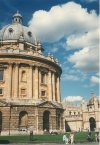
Christ Church, Oxford |
|
||

|
|
